Introducing Huskeys Agentic Profiling: Bringing Business Intent to Network Edge Security
Meet Profiling: a business-aware profile of every web app and API, so security controls fit what each one actually does.


Huskeys Profiling builds a dynamic profile of each web application and API, including its endpoints, users, behavior, existing security controls and critical business paths. This profile provides the application-level context behind the Huskeys Hardening Loop, helping teams tailor security controls to business needs instead of relying on generic rules. Profiling is available in beta to select customers, with no special onboarding required.

Security controls can identify suspicious traffic. But without understanding what an application does, who relies on it, and which business paths matter most, they lack the context to decide what should be protected, and how.
Today, Huskeys is launching Profiling, a new capability that builds a dynamic, business-aware profile of every web application and API. By connecting application behavior, users, existing security controls and critical business paths, Profiling helps organizations move beyond generic rules toward protection tailored to their applications and business needs.
The payoff is practical. Security controls can be tailored to a checkout flow's specific requirements, helping legitimate customers complete purchases while reducing exposure to abuse.
Many Layers, No Shared Context
Most edge stacks combine third-party tools: CDNs, bot management, WAFs, and application and API security tools. Each works inside its own layer, with its own rules and its own idea of "normal." None of them knows which path matters most to the business.
Without that context, controls default to generic, and generic controls fail in both directions:
- Legitimate traffic gets blocked. Real customers hit false positives, often mid-checkout. (More on this in Sorry, Your Order Contains Suspicious Characters.)
- Malicious activity gets through. Abuse that looks normal to each layer on its own passes all of them.
Network Edge Security Management (NESM) was built to close this gap across the edge. Profiling closes it at the level of each application.
Building a Profile of What Matters
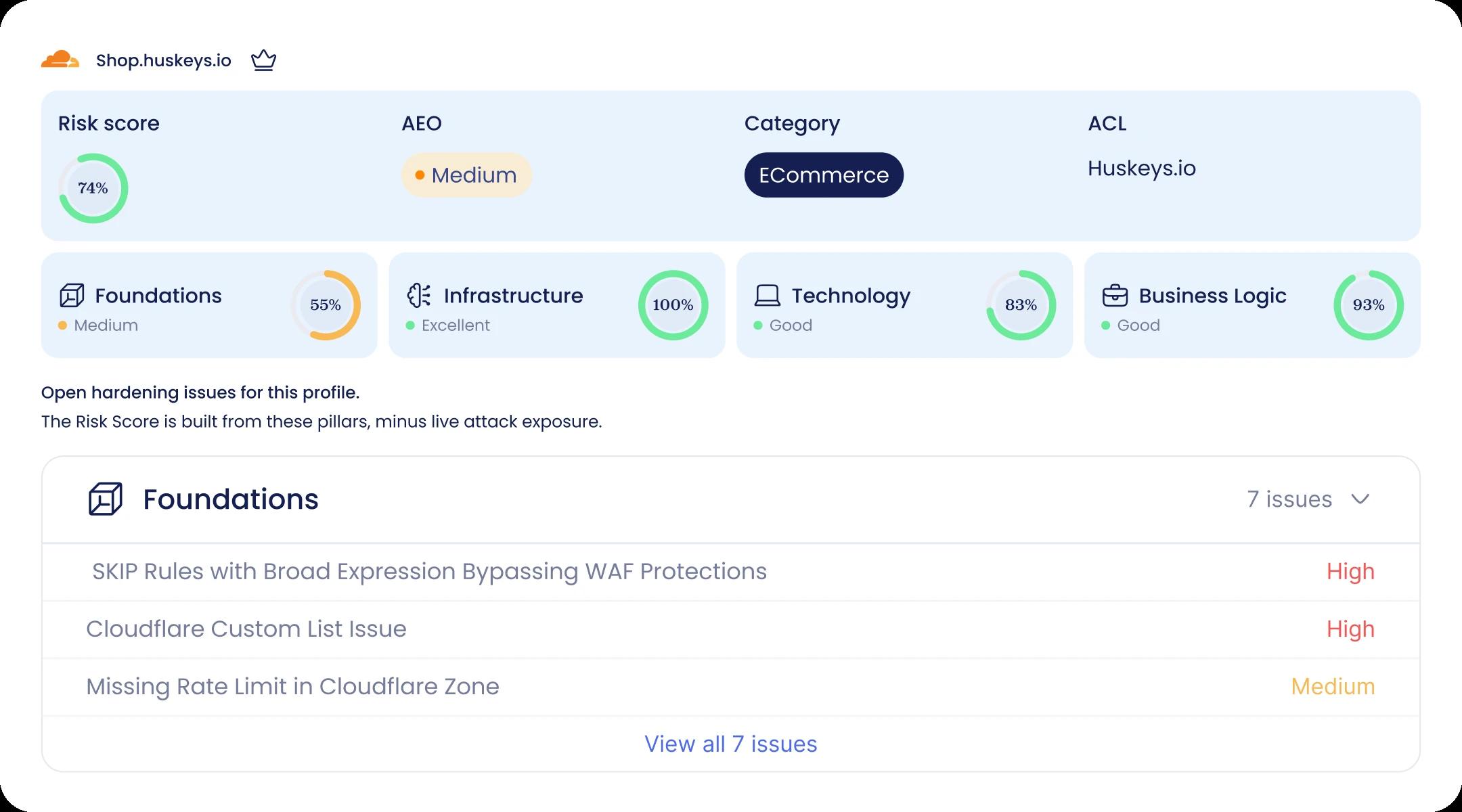
Profiling goes beyond collecting signals from security infrastructure. It's built to understand the application itself. For every web application and API, the profile covers:
- Endpoints: what exists, and how each one is actually used.
- Users and callers: who or what is accessing the application: human, automated or agentic.
- Intent: what those users and callers are trying to accomplish.
- Behavior: how the application normally behaves, and when that changes.
- Existing controls: which protections are already in place, across every vendor.
- Business paths: which flows matter most to the business, like login, search, cart and checkout.
Not another inventory
Discovery tools tell you what is there. Profiling tells you what it means: how traffic, application behavior, existing controls and business intent relate to each other. Huskeys then evaluates traffic and recommends controls against that customer-specific view, not one-size-fits-all assumptions.
"A profile changes the question from 'What does this traffic look like?' to 'What does this traffic mean to this business?'"
— Roy Weisfeld, Co-Founder and CTO, Huskeys
A dedicated guard for every application
"Most organizations protect everything the same way, like a mall with one security team guarding every store identically. We give every store its own dedicated guard, tailored to what it needs."
— Roy Weisfeld
In practice, a checkout flow, a login endpoint and a public content page get controls that fit what each one actually does.
From Security Detection to Hardening
Profiling is the foundation of the Huskeys Hardening Loop, connecting security findings to actionable controls through a process of prioritization, customer approval and ongoing measurement:
- Profile the business path.
- Detect changes, abuse or exposure.
- Identify the highest-impact fix.
- Approve the proposed change.
- Deliver the control.
- Observe its impact.
Because one profile spans multiple security layers, the loop also reduces the work of managing controls across different platforms and teams. Huskeys orchestrates the change on top of the stack you already run, with no rip and replace.
"Profiling gives us the context to turn security findings into controls tailored to each application and its critical business paths. The customer decides; Huskeys delivers."
— Yotam Mazurik, Research Team Lead, Huskeys
AI Agents Are A Game Changer: Why Application Context Matters Now More Than Ever
Agentic traffic blurs the line between help and abuse
Applications now serve a mix of human, automated and increasingly agentic traffic. AI agents are starting to shop, transact and complete workflows for real customers. In July 2026, Cloudflare reported that more than 50% of Internet traffic is now non-human, a figure that covers bots and automated traffic broadly, not AI agents alone.
Legitimate and malicious automation can look similar in volume and behavior. Block all of it and you block revenue. Allow all of it and you invite business logic abuse. (See Same Game, New Rules: How Agentic Traffic Rewrote Bot Defense.)
Understanding the intended business path doesn't settle that question on its own. It adds context: one more signal for deciding which traffic to allow, challenge or block.
The exposure window keeps shrinking
Attackers move at machine speed, and the time between disclosure and exploitation keeps getting shorter. Faster detection and response help, but they still mean racing the clock.
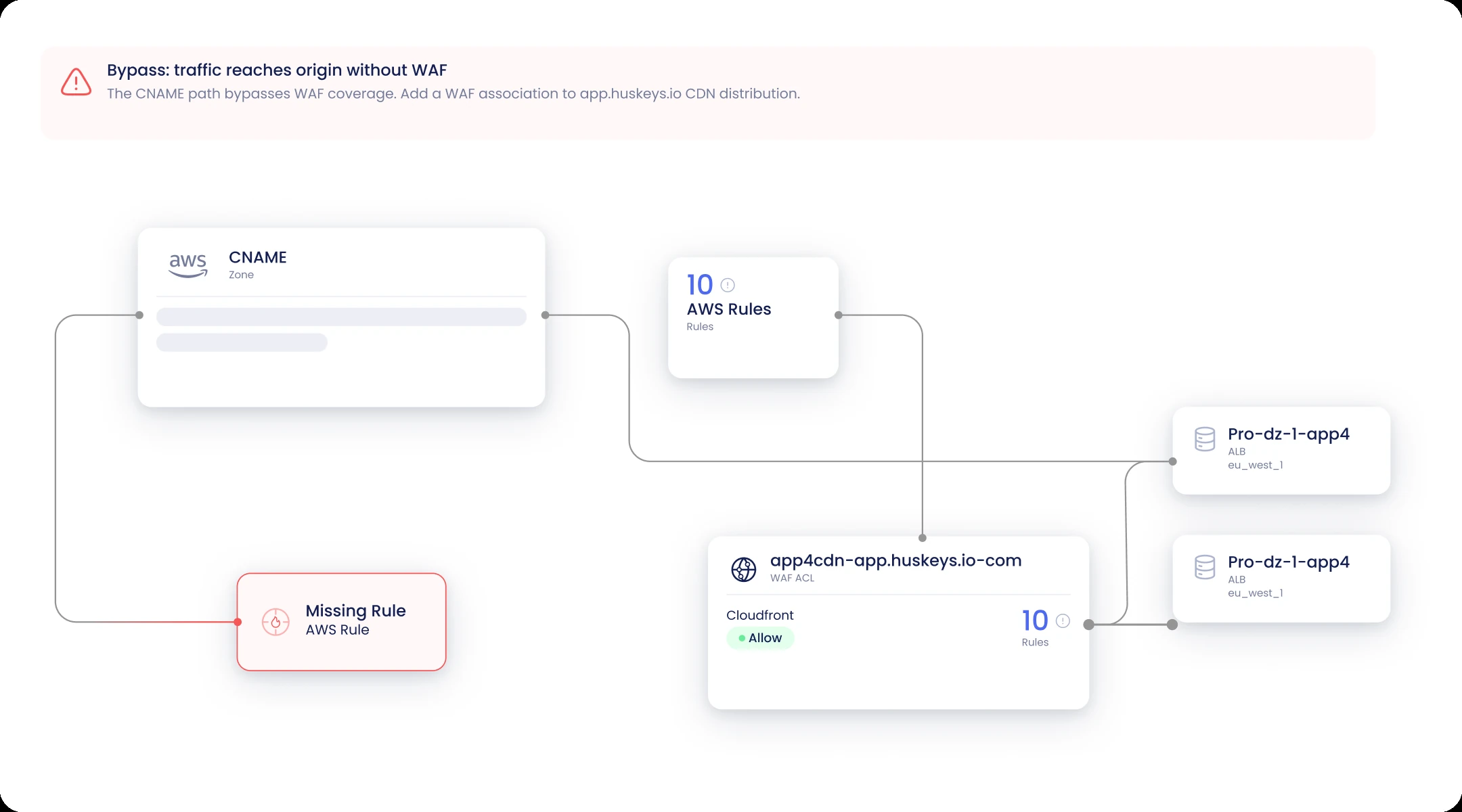
Huskeys is building toward a different model, where controls such as a virtual patch are scoped and prepared around the application before an attack reaches it. Profiling, available today in beta, provides the application context that model depends on.
"Security teams have spent years trying to respond faster. We believe there is another approach: understand what matters before the next incident, so you can remove the window instead of racing the clock."
— Roy Weisfeld, Co-Founder and CTO, Huskeys
Building the Foundation for Application Hardening
Huskeys Profiling is available now in beta for select customers. It requires no special onboarding, and customers can begin seeing value within hours. It's the first step in a broader hardening journey that connects application context, security decisions and measurable impact for every API and web application.
The Bottom Line
The edge doesn't need more generic rules. It needs to know what it's protecting.
Profiling gives every application its own profile and helps tailor security controls to the business paths that matter most. Grow your business without compromising on security.
See Profiling in action: Book a Demo
For each web application and API, Profiling analyzes its endpoints, users and callers, behavior, existing security controls and critical business paths. Together, these form a business-aware profile that security decisions can be measured against.
Discovery lists what exists. Profiling adds what it means to the business, so controls can be scoped to each path.
No. It works on top of your existing network edge stack, with no rip and replace.
Profiling is in beta for select customers and needs no special onboarding. Book a demo to see it on your applications.